Watch out for the T-Charge!

Shiply blog image

Image Source: independent.co.uk

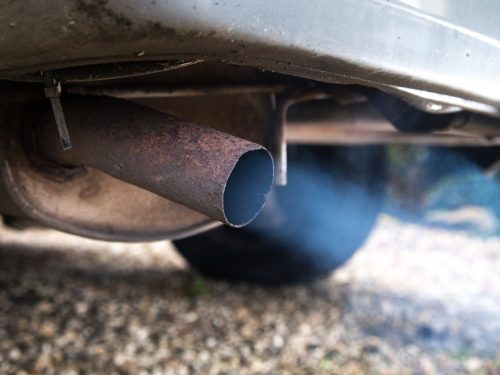
On 23 October, the T- Charge (Toxicity Charge) will be introduced in London for certain vehicles. Any vehicle that doesn’t meet the minimum euro emission standards will need to pay an extra fee of £10 when entering the congestion charge zone in Central London (unless you are a resident, where a discount is available).
The T-charge comes as another way to tackle air pollution in central London, by discouraging those with older and more polluting vehicles adding to the poor air quality that current exists in the capital. The pollution level is currently much higher than it should be, and considered to be a ‘health crisis’ by London’s Mayor Sadiq Khan, with forty thousand deaths in London per year linked to emissions from traffic and factories.

The T-charge kicks off the move towards London becoming an Ultra Low Emission Zone (ULEZ), which, when has been implemented, will mean the end of the T-Charge.

How can I avoid the charge?
Check your vehicle’s V5C to find out your Euro emission standard and once you know, take a look at the table on the TfL website to see if you’ll be affected. If you’re going into the T-charge/congestion charge zone regularly for work, you may want to consider changing your vehicle (if possible), which may work out cheaper in the long run, or you may want to consider taking a different route that avoids the central area.

If you’re driving into the T-charge zone for leisure, public transport is a much better option (if you can). It’ll work out much cheaper, will lower your emissions and you’re likely to get to your destination(s) much faster.
The T-charge will be in operation on weekdays 7am – 6pm.

Will you be affected by the T-Charge? What changes will you be making to avoid the charge?

World Car Free Day 2017

This Friday (22 September) is World Car Free Day, a day where many cities across the world encourage people to not use the cars for a full day, swapping them for greener alternatives like walking or cycling.

Shiply blog image

World Car Free Day in Kuala Lumpar. Image Source: thesundaily.my

Last year (September 2016) Paris joined the list of cities involved in World Car Free Day, alongside Jakarta, Brussels, Kuala Lumpar, Copenhagen and Bogota, who totally ban cars from certain roads in their city centres. This allows them to see what their cities could be like without cars, and with significantly less pollution.

Following the recent announcement of banning the manufacture of petrol and diesel vehicles in the UK from 2040, perhaps days like World Car Free Day will be introduced to London, something that was hinted at by Mayor Sadiq Khan according to an article in the Guardian a year ago.

A poll by YouGov in 2016 showed that 63% of Londoners were supportive of motor vehicles being banned from the central third of the city, and 58% were supportive of having a ban every month! Sadly, London has yet to get involved, but smaller areas across the UK are having their own World Car Free Day, including Shoreditch, London and Cardiff, Wales.

Is your local area taking part in World Car Free Day? How will you be getting around?

Easy ways to cut the cost of your transport

Drive more efficiently

Shiply blog image
Next time you get in the car, think about the way you drive. Do you accelerate hard after stopping, or do you gradually increase your speed? Do you brake late when approaching congestion and red traffic lights, even though you’ve seen it coming from far away? Do you check your tyre pressure regularly or only inflate when they’re noticeably low? Do you have your car regularly serviced or do you just do the bare minimum legal requirement?
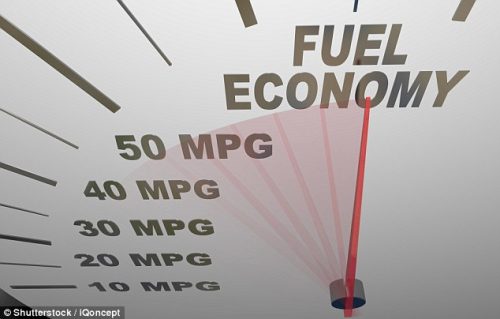
Driving efficiently could save you money. If your car has the functionality, change the settings so you can monitor your miles per gallon (mpg) so you can get an idea of how efficient your driving is.
The MPG of a car varies depending on several factors, but you can increase the MPG by driving more smoothly (slowing down by allowing the car to come to a stop rather than braking – if safe to do so), accelerating slowly, and regularly servicing your car so that it’s always running in good condition.
For cheaper fuel, use websites like petrolprices.com so you know which is the cheapest garage in a certain area, and remember that motorway service stations tend to charge more than local ones. Filling up in the town near you might be significantly cheaper than pulling into a services (if you can wait!)

Split Ticketing

Shiply blog image
Use split ticketing apps for your train journeys to find the cheapest way to get to your destination. Split ticketing works on the concept that many journeys are actually cheaper by buying separate tickets for parts of the same journey, rather than buying one ticket for the whole journey. For example, sometimes it may be cheaper to buy a single from London Euston to Milton Keynes and a single from Milton Keynes to Birmingham rather than a ticket from London Euston to Birmingham. There are a few apps and websites like Ticket Clever and Train Pro that can automatically work out the cheapest ticket combinations without affecting your journey. Give it a go next time and see how much you can save.

Use cashback/reward sites

Shiply blog image
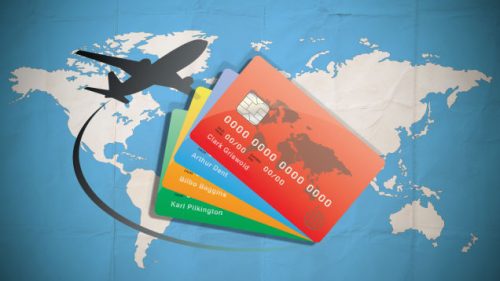
If you do end up paying more money than you’d like for your transport, you might as well be rewarded for it somehow. There are several credit cards that reward spending, like the British Airways AMEX card or the Virgin Atlantic White card. There are also cashback websites that give cashback when booking through companies including National Express and Virgin Trains like TopCashBack and QuidCo to make your purchases work harder.
Supermarket loyalty schemes Nectar and Clubcard also allow you to swap your points for non-supermarket related benefits, like giving you money off train or coach tickets.

Good luck and happy travelling!